
Sacred Pause: The Tiny Habit That Changes Everything

I love learning things that are counterintuitive in life because they often point to hidden truths of great value.
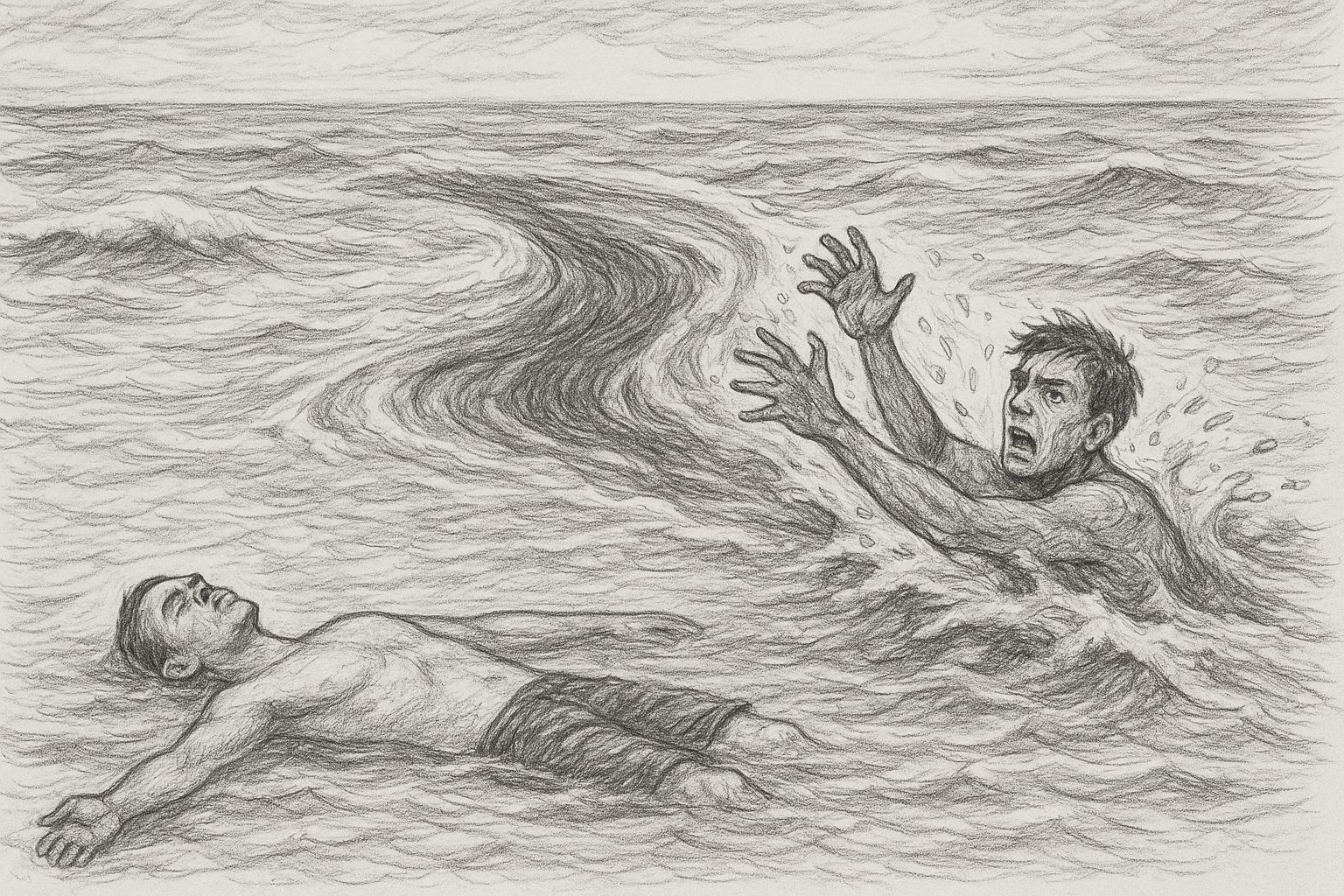
Recently, I discovered something called rip currents, a strong, narrow flow of water moving directly away from shore. Swimmers caught in rip currents instinctively panic and swim toward the shore.
But the current is often stronger than the swimmer. Fighting it causes rapid exhaustion. Once exhausted, the swimmer may sink and drown, even though the current itself doesn’t pull them under; it just carries them away.
Lifeguards teach the opposite: don’t resist directly.
Instead, float to conserve energy and let the current carry you for a while. Then swim parallel to the shoreline to move sideways out of the narrow current. Once free of it, angle back toward the shore with the help of the waves.
Paradoxically, it’s letting go of the desperate fight that saves lives.
The lesson is clear: reacting with frantic doing is usually ineffective and may even lead to disaster.
The Trance of Frantic Doing
In an A Course in Miracles podcast, a guest shared his story.
He was a musician who wrote his first song in high school, but everyone said it was garbage. The shame destroyed him, and he promised himself never to feel that pain again.
To escape it, he became a workaholic, striving to compensate for the shame. Though he made progress in his career, he remained overwhelmed and unfulfilled.
When he began waking up from the trance of frantic doing, he realized how strong the grip of the past was. To move forward, he had to let go of the guilt of “failing” his high school self.
The Inner Discomfort That Keeps Pushing
For much of my life after high school, I carried a constant sense of not doing enough, always lingering in the background. There was an incessant drive to chase something and to run away from something.
Part of my attention was always fixed on the future. But the real reason was to escape a painful past. Rarely did I pause to ask:Is my constant striving—both in thought and action—true aspiration, or just a smokescreen hiding the pain I don’t want to face?
When inner discomfort arises, we instinctively want to get rid of it as quickly as possible.
We often attribute the pain to our life situations. We think, Because my life lacks this, I feel this bad. Then we seek outer solutions, chasing goals to either get something or avoid something. We tell ourselves:When my life looks exactly like this, I’ll be okay.
When this becomes our default mode, we fall into the trance of frantic doing, an autopilot of reaction.
Another way we avoid discomfort is distraction: endless entertainment, scrolling, partying, or even excessive reading.
It’s almost like an underlying existential anxiety, an urgency, as if a death god were poking his bony finger at your back whispering,Do something. Do something. Do something. And so you keep moving, afraid to turn around and face him.
The Toxic Hustle Culture
Hustle culture is a collective trance.
Its philosophy is simple but poisonous: you are not enough. You must do more, achieve more, to finally be worthy. Only when you are worthy will you deserve happiness.
But in this mindset, progress is never enough. The present moment is never enough.Now becomes nothing more than a stepping stone to an imagined future. Happiness is always postponed.
There’s nothing wrong with doing. The problem is frantic doing—it’s overcompensation.
Big creators often use phrases like “top 1% human” or “getting ahead of others” in their headlines. It works because it taps into collective pressure: compete, or fall behind.
But the teachers I respect don’t frame life this way. David R. Hawkins created his Map of Consciousness, showing different levels from low to high. Yet he said every level serves its own purpose; there is no good or bad.
Similarly, meditation teacher Shinzen Young once said that maybe only 1% of people meditate. Yet he never suggested meditators were “better.” Instead, he devoted himself to making meditation accessible to everyone.
The Problem With Incessant Doing
When we’re consumed by frantic doing, we lose touch with the present moment and with balanced perspective. We become driven by tunnel vision, interpreting the past, present, and future through fear. This is deeply ineffective.
Have you ever been frantically working on something, only to suddenly realize:Wait, I don’t even need to do this?
For example, a client mentions something and you panic, thinking you must prepare a presentation today. You rush into work, frantic. But then a colleague suggests you clarify first. When you do, the client says he might not need it—and if he does, not until next week.
In frantic mode, we lose touch with the big picture.
We lose sight of all the factors involved in the situation. Fear narrows our perception, limiting both our interpretations and our options.
We also lose touch with a subtle truth: a basic I’m-okayness. Think about times when you thought a failure would ruin you—like being rejected by a crush—yet later you realized you were fine. Painful, yes, but temporary.
In frantic doing mode, however, the assumption in the back of the mind is:If I mess this up, I’m going to hell.
The Art of the Sacred Pause
Have you ever wondered how ships cross vast oceans without getting lost?
Modern ships use GPS, radar, and other systems to continuously monitor their position and adjust course. They adapt to environmental conditions, hazards, weather, and traffic.
The key is continuous monitoring and correction.
In daily life, are you continuously monitoring your present experience, so you can adjust and adapt? Or are you caught in the vortex of thoughts about past and future, reacting blindly?
This is why we need the art of the sacred pause.
A sacred pause is a mindful moment when you return to the present, intentionally aware of your experience, pleasant or unpleasant, without resistance.
By practicing the sacred pause, you regularly collect yourself throughout the day.
To “collect oneself” means regaining composure—restoring calm, clarity, and stability.
It is a self-care practice, grounding you in the now.
If you want the best future, doesn’t it make sense to hold an inclusive, balanced, realistic view of the past and present? Since the past is gone, your interpretation of it only happens in the now. It all comes down to now.
Your perception shapes your thinking. Your thinking shapes your actions. And your actions shape your future results.
It all begins in the present. Doesn’t it make sense to pause and collect yourself often, just as a ship constantly evaluates its course?
Grounding in the present, radically accepting everything here and now instead of fleeing to distractions or disguising discomfort with frantic doing, allows thinking and action to be truly effective.
You cannot fully control your destiny. That’s just a popular affirmation. But you can increase the likelihood of creating the future you want. And the foundation for that likelihood is grounding in the now.
Why is it sacred? Because the present moment is sacred. Because awareness itself is sacred. Because breaking the pattern of reaction is sacred courage. Because non-resistance is sacred poise.
Sacred pause shifts how you relate to the present and to life. It interrupts reactivity and fosters deeper engagement with what is unfolding.
Despite its benefits, pausing can feel uncomfortable, especially in heated moments. It feels counterintuitive to let go of the instinct to react. Yet without pausing, we miss the chance to meet our emotions with mindfulness—the key to acceptance and transformation.
Benefits of the Sacred Pause
Increased Awareness: Pausing helps you zoom out and see the big picture. You become more aware of your emotional, physical, and mental states.
Better Decisions: A pause allows intentional choices, not just reactive habits.
Emotional Processing: Slowing down lets you fully feel and understand your emotions.
Deeper Insights: Wisdom arises from stillness, and pause gives you access to it.
Behavior Change: To shift habits, you must pause before acting and choose differently.
Releasing Inner Blocks: For example, pausing right before lashing out in anger. Hard, yes. But extremely rewarding. Over time, this breaks the energy that feeds the anger.
Accept That Pausing Is Hard
First, accept that pausing is not easy, even though it sounds simple.
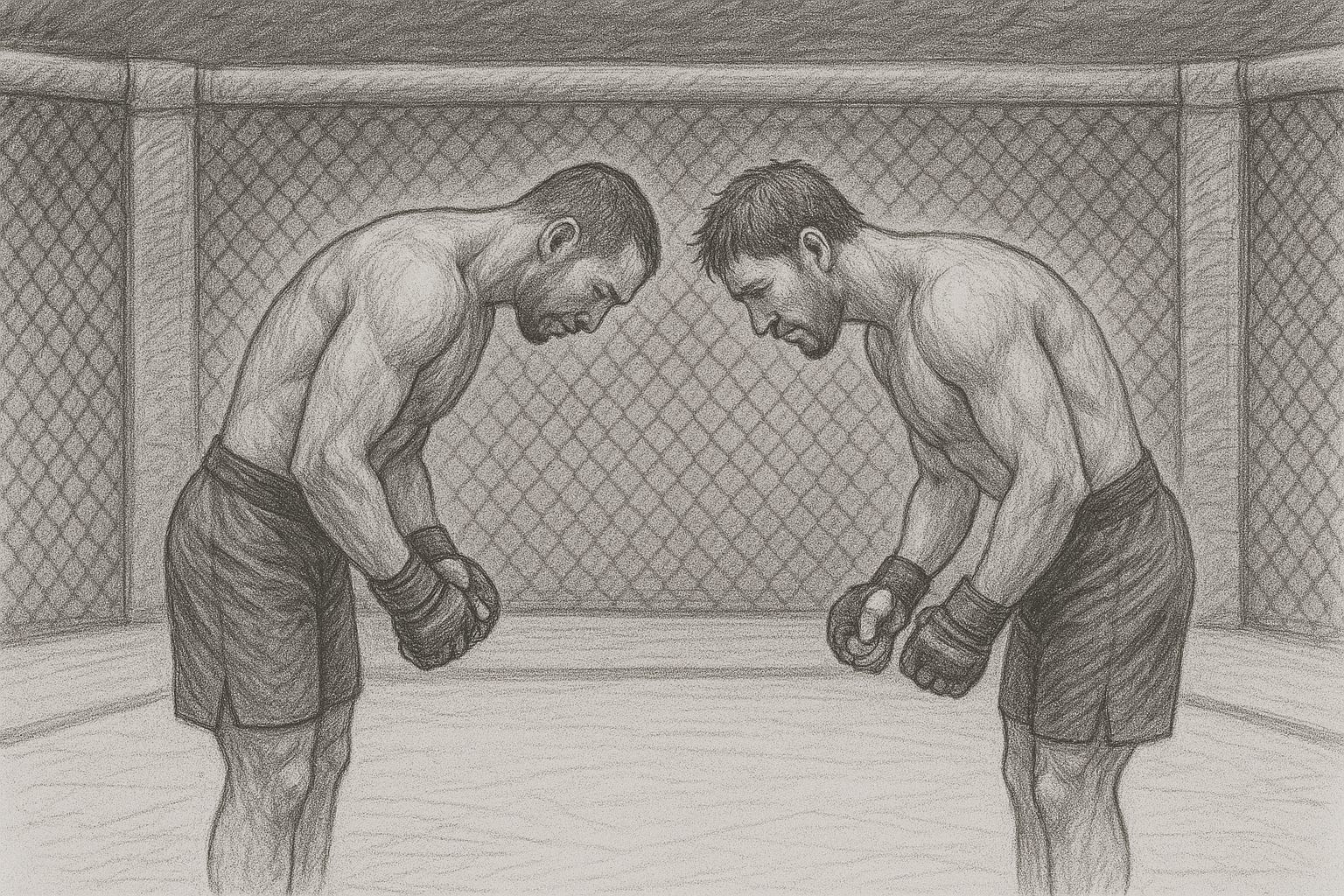
If you step into an MMA ring, you must accept your opponent’s strength. That makes you alert and ready.
People often say, “Just take a deep breath and slow down.” But reacting has become a deeply ingrained habit, powered by suppressed emotions and accumulated pain.
In heated moments, all past wounds can gather into a single force, overwhelming your psyche.
To pause, you must catch yourself when you feel inner pressure, when you’re about to react, or even in the middle of a reaction. The earlier you catch it, the easier it is to pause. This requires mindfulness: awareness of what is happening as it happens.
Then comes the choice to pause. It takes courage, but sincere willingness is enough. Awareness is 80% of the work.
A Practical Guide to Sacred Pauses
The essence of pausing is anchoring yourself in the present.
That means observing thoughts and feelings without identifying with them.
You might:
Take a few deep breaths, noticing your belly rise and fall.
Locate the strongest sensation in your body and observe its details.
Place attention on neutral external sounds or sights with curiosity.
Notice inner mental talk non-judgmentally.
Allow everything to be there, even the unpleasant. Remind yourself:This is a pause. This is a sacred moment.
Visualization can also help. For example, imagine yourself as a tiny dot on a dirt ball spinning in infinite space. This perspective brings humility and context. (I learned this from Michael A. Singer.)
Because reacting is already a habit, it helps to build a counter-habit, pausing regularly when life is calm.
Set reminders: Every hour, pause for one minute and focus on your breath. (A Course in Miracles uses similar hourly reminders.)
Bookend pauses: Before and after certain activities, checking your phone, entering a meeting, taking a bite of food—pause.
Train in real-life challenges: For example, if your boss singles you out harshly, pause before reacting. Pause and notice what shifts.
Maybe after pausing, you respond kindly, discovering it was a misunderstanding. Or maybe you still snap and get fired, but realize the workplace was toxic anyway.
There are no “right answers” for life’s infinite situations.
But pausing elevates your perspective. Choices made from that higher ground are always better than those made from fear and tunnel vision.
I loved it, thank you. Resonated with a lot here.